
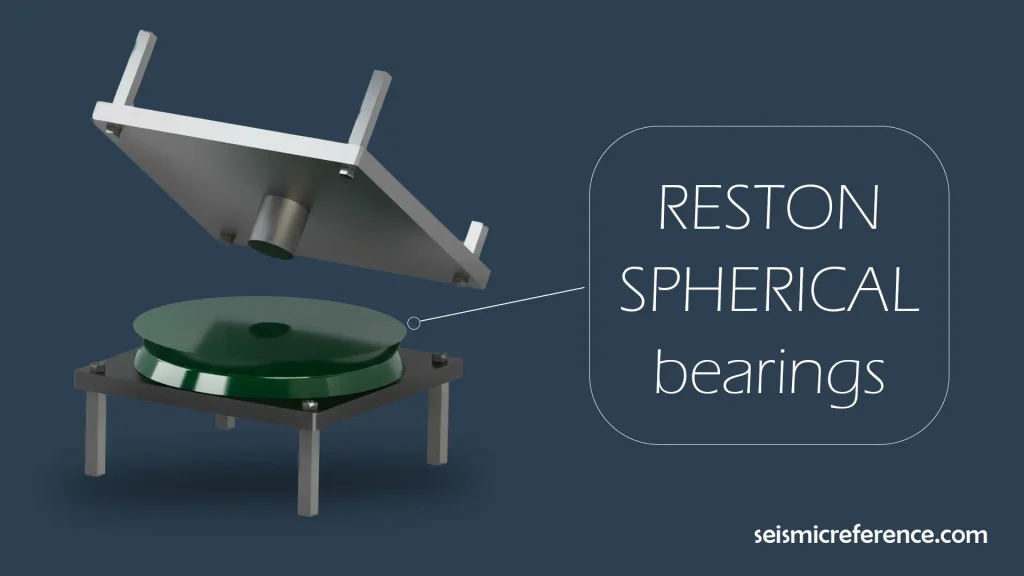
Reston Spherical Bearings | Essential Components for Modern Structural Engineering
Reston Spherical Bearings represent a pinnacle in bearing technology, designed specifically to handle the demanding requirements of large-scale infrastructure projects. These bearings excel in transferring substantial vertical loads while allowing for multi-directional rotations and movements, making them indispensable in bridges, buildings, and industrial facilities. Engineered with precision, Reston Spherical Bearings ensure structural integrity under extreme conditions, from high winds to seismic activity. Their compact design and robust performance have made them a go-to choice for engineers seeking reliable solutions that minimize maintenance and maximize longevity.
Important points to consider
- High Load Capacity: Capable of supporting loads from 1,000 kN up to 250,000 kN, ideal for heavy-duty applications.
- Flexibility in Movement: Accommodate rotations about any axis and cumulative sliding movements, reducing stress on structures.
- Durability and Low Maintenance: Advanced materials like ROBO-SLIDE 75 provide exceptional wear resistance, even in harsh environments.
- Compliance and Reliability: Meet stringent standards such as EN 1337 and ETA-08/0115, ensuring safety and performance.
- Potential Drawbacks: While highly effective, they require precise installation to avoid issues in space-constrained sites; research suggests proper alignment is crucial for optimal function.
Design and Functionality
Reston Spherical Bearings operate on a simple yet effective principle: a convex calotte slides within a concave lower part, facilitating smooth rotations and load distribution. This setup allows for angular adjustments without compromising load-bearing capabilities.
Applications in Infrastructure
In bridge construction, Reston Spherical Bearings are frequently used to manage dynamic loads from traffic and environmental factors. For instance, they support suspension bridges where wind-induced movements are common.
Types Available
Reston Spherical Bearings come in several variants, including fixed, guided sliding, and free sliding types, each tailored to specific structural needs.
Installation Best Practices
Proper installation involves anchoring with dowels or shear studs, ensuring alignment for long-term performance.
Maintenance Tips
Regular inspections for dust and grease levels help extend the lifespan of Reston Spherical Bearings, preventing premature wear.
In the realm of civil engineering, Reston Spherical Bearings stand out as specialized structural components that bridge the gap between rigidity and flexibility in large constructions. These bearings, often integrated into projects requiring precise load management, draw from decades of innovation to offer solutions that adapt to real-world challenges. While primarily associated with infrastructure like bridges and high-rise buildings, their versatility extends to industrial settings where rotational freedom is essential. Evidence from various projects indicates that incorporating Reston Spherical Bearings can significantly enhance a structure’s resilience, though engineers must weigh factors like initial cost against long-term savings in maintenance.
To delve deeper, let’s explore the foundational aspects. Reston Spherical Bearings are crafted to transmit vertical forces efficiently while permitting rotations in multiple directions. This is achieved through a spherical interface that mimics a ball-and-socket joint, allowing the superstructure to pivot relative to the substructure. Such design is particularly beneficial in regions prone to earthquakes or high winds, where fixed connections might lead to failures. Studies on similar bearing systems highlight how this flexibility distributes stresses more evenly, potentially extending the service life of the entire structure.
Understanding Reston Spherical Bearings
Reston Spherical Bearings are not your average mechanical parts; they are engineered marvels tailored for heavy-duty civil applications. At their core, these bearings consist of a lower concave element and an upper convex calotte, enabling seamless articulation.
Key Design Principles
The primary mechanism relies on low-friction sliding surfaces that accommodate rotations up to several degrees. This ensures that even under immense pressure, the bearing maintains its position without binding.
Materials and Construction
High-grade steel, such as S355, forms the base, complemented by advanced sliding materials like ROBO-SLIDE. This combination provides resistance to corrosion and wear, suitable for outdoor exposures.
Benefits of Reston Spherical Bearings in Projects
One of the standout advantages of Reston Spherical Bearings is their ability to handle medium to high loads in compact spaces. This makes them ideal for urban developments where space is at a premium.
Enhanced Load Distribution
By allowing multi-axis rotations, these bearings prevent localized stress concentrations, which can be a common issue in rigid systems.
Cost-Effective Longevity
With minimal friction coefficients, Reston Spherical Bearings reduce energy loss and wear, leading to fewer replacements over time.
Environmental Adaptability
Operating effectively from -50°C to 50°C, they perform reliably in diverse climates, from arctic conditions to tropical heat.
Types of Reston Spherical Bearings
Reston Spherical Bearings are categorized into fixed (KF), guided sliding (KE), and free sliding (KA) types, each serving distinct roles.
Fixed Type (KF)
This variant resists horizontal forces in all directions, making it suitable for stable anchor points in structures.
Guided Sliding Type (KE)
Allowing movement along one axis while restraining the other, KE bearings are perfect for controlled expansions in bridges.
Free Sliding Type (KA)
Offering unrestricted horizontal movements, KA bearings excel in applications requiring full flexibility.
| Type | Load Capacity (kN) | Rotation Capability | Displacement Range | Typical Applications |
|---|---|---|---|---|
| KF (Fixed) | Up to 50,000 | Multi-axis | None (fixed) | Anchor points in buildings |
| KE (Guided Sliding) | Up to 50,000 | Multi-axis | Longitudinal ±50 mm | Bridge expansions |
| KA (Free Sliding) | Up to 50,000 | Multi-axis | Longitudinal ±50 mm, Transverse ±20 mm | Wind-prone structures |
Applications Across Industries
Reston Spherical Bearings find extensive use in bridge engineering, where they support superstructures under varying loads.
In Bridge Construction
Projects like the Ijssel Bridge in the Netherlands demonstrate how these bearings manage wind and traffic-induced movements effectively.
In Building Design
For high-rises, such as the Dubai Sports Complex, they provide the necessary articulation to absorb seismic forces.
Industrial Uses
In facilities like conference centers, Reston Spherical Bearings ensure smooth operation of movable elements.
Installation and Maintenance Guidelines
Installing Reston Spherical Bearings involves precise alignment using regulating screws and mortar beds for secure fixing.
Step-by-Step Installation
Begin with factory pre-setting, followed by on-site positioning and grouting to ensure a level base.
Routine Maintenance
Inspect for debris accumulation and reapply silicone grease periodically to maintain low friction.
Troubleshooting Common Issues
If misalignment occurs, adjustments via anchor plates can restore functionality without major overhauls.
Quality Assurance and Standards
Reston Spherical Bearings adhere to international norms, including ISO 9001 for manufacturing quality.
Certifications and Approvals
They hold CE marking and comply with EN 1337-7, verified by independent bodies like MPA Stuttgart.
Testing Protocols
Rigorous friction and wear tests confirm their performance, with ROBO-SLIDE enduring up to 50 km of sliding without significant degradation.
Comparing Reston Spherical Bearings to Alternatives
When pitted against pot bearings or elastomeric pads, Reston Spherical Bearings offer superior rotation capacities.
Versus Pot Bearings
While pot bearings handle high loads, they lack the multi-directional rotation of spherical designs.
Versus Elastomeric Bearings
Elastomeric options are cheaper but degrade faster under extreme conditions compared to the durable ROBO-SLIDE material.
| Comparison Factor | Reston Spherical Bearings | Pot Bearings | Elastomeric Bearings |
|---|---|---|---|
| Load Capacity | High (up to 250,000 kN) | High | Medium |
| Rotation Flexibility | Excellent (multi-axis) | Limited | Moderate |
| Durability | High (low wear) | Medium | Low (aging issues) |
| Cost | Moderate | Low | Lowest |
Case Studies and Real-World Performance
Real-world implementations underscore the reliability of Reston Spherical Bearings.
Irtysh River Bridge, Kazakhstan
Here, guided sliding types managed thermal expansions across a vast span, ensuring stability.
Tran Thi Ly Bridge, Vietnam
Free sliding variants accommodated dynamic loads from traffic, proving resilient in a humid climate.
Revere Bridge, USA
Fixed bearings provided solid anchoring, withstanding coastal winds effectively.
Future Trends in Bearing Technology
As infrastructure evolves, Reston Spherical Bearings are poised to incorporate smart sensors for real-time monitoring.
Innovations on the Horizon
Developments in materials may further reduce friction, enhancing efficiency in sustainable projects.
Sustainability Considerations
With EPD certifications, these bearings align with green building practices by minimizing material use.
In summary, Reston Spherical Bearings embody a blend of strength and adaptability, crucial for modern engineering feats. Their proven track record in diverse applications positions them as a reliable choice for forward-thinking projects.